Home » Services » PRK
PRK
PRK (Photorefractive Keratectomy): An Expert Guide
At Clariti Advanced Vision Correction, we understand that the decision to have eye surgery is a big one. That’s why we want to provide you with all the information you need to make an informed choice about your vision. If you’re considering laser eye surgery, you’ve likely heard of PRK, or Photorefractive Keratectomy. But what exactly is PRK, how does it work, and is it the right choice for you? In this guide, we’ll answer these questions and more.
What is PRK?
PRK is a type of laser eye surgery used to treat refractive vision problems, such as nearsightedness (myopia), farsightedness (hyperopia), and astigmatism. It’s one of the most well-established and trusted procedures for reshaping the cornea to improve vision. The goal of PRK is to eliminate or reduce the need for glasses or contact lenses by correcting the way light enters your eye, allowing you to see clearly.
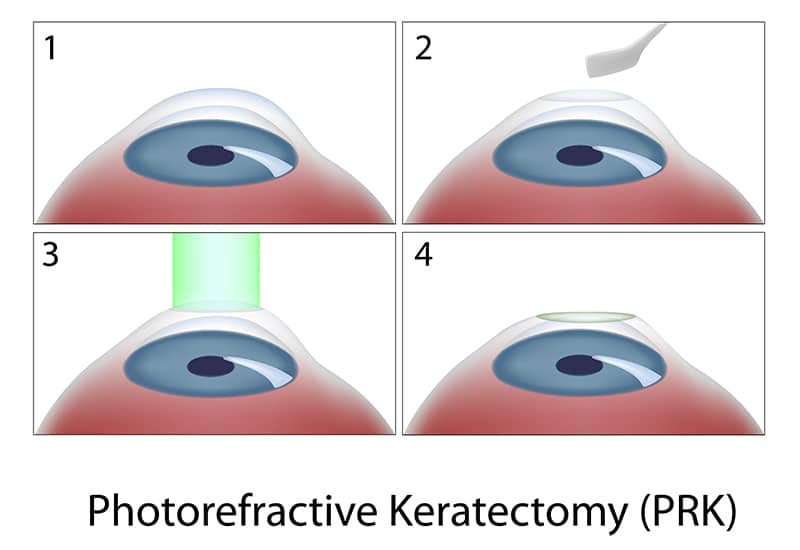
PRK works similarly to LASIK (another popular laser vision correction surgery), but the key difference lies in how the procedure is performed. In LASIK, a flap is created in the cornea, whereas in PRK, the surface layer of the cornea (the epithelium) is gently removed to allow the laser to reshape the underlying corneal tissue. This slight difference in technique makes PRK a good option for people whose corneas may be too thin for LASIK or those who have other conditions that make LASIK less ideal.
How Does PRK Work?
The PRK procedure begins with a thorough eye examination to determine your eye health and the appropriate level of correction needed. Once you’re cleared for the procedure, the process itself takes only about 3 to 5 minutes per eye.
Here’s how it works:
- Anesthesia: Numbing eye drops are applied to ensure that you feel no pain during the procedure. You will remain awake, but relaxed throughout.
- Removal of the Epithelium: The outer layer of your cornea, called the epithelium, is gently removed. This can be done using a small brush or laser.
- Laser Treatment: Once the epithelium is removed, a precise excimer laser is used to reshape the cornea. The laser carefully adjusts the curvature of the cornea to improve how light is focused on the retina.
- Healing: After the laser treatment, the surface of the cornea is smoothened. The epithelium will naturally regenerate over a few days, and the healing process begins.
PRK doesn’t require the creation of a corneal flap, making it a great option for patients with thinner corneas or those who lead active lifestyles where the risk of flap dislocation is a concern.
Common Symptoms and Side Effects
As with any surgery, there are certain symptoms or side effects that you may experience during the healing process. These are typically temporary and should subside as your eye heals. Some of the most common symptoms include:
- Blurry Vision: Immediately after surgery, your vision may be blurry or hazy. This is normal and part of the healing process.
- Discomfort: You may experience some discomfort or mild pain in the first few days following the procedure. This is often managed with over-the-counter pain relievers and lubricating eye drops.
- Sensitivity to Light: Many patients experience light sensitivity in the days following the surgery. Wearing sunglasses when outdoors can help alleviate this discomfort.
- Dry Eyes: Dryness is common during the healing period, but this typically resolves as the eye heals and the tear production returns to normal. Your doctor may recommend lubricating eye drops to ease dryness.
- Visual Fluctuations: Vision can fluctuate in the early stages of recovery. You may notice that your eyesight improves and then worsens before gradually stabilizing.
It’s important to note that while side effects are common, complications are rare. PRK is considered to be a safe and effective procedure for most patients.
Treatment Options: Who Would Benefit From PRK?
PRK is an excellent treatment option for many people, but it is especially beneficial for certain groups. You may be a good candidate for PRK if:
- You Have Thin Corneas: If your cornea is too thin for LASIK or you have other corneal irregularities, PRK is often recommended as an alternative.
- You Lead an Active Lifestyle: Because PRK doesn’t involve creating a corneal flap, there’s no risk of the flap becoming dislodged, which can be a concern for athletes or those who participate in contact sports.
- You Have a History of Dry Eyes: For patients who have dry eyes, PRK may be a better option because LASIK can sometimes worsen dry eye symptoms.
- You Have Mild to Moderate Refractive Errors: PRK can effectively treat nearsightedness, farsightedness, and astigmatism. However, in cases of very severe refractive errors, alternative treatments may be more appropriate.
- You Are Looking for a Long-Term Solution: PRK has a high rate of long-term success in improving vision. Most patients achieve clear vision without glasses or contact lenses after the procedure.
It’s important to have a consultation with an experienced ophthalmologist, like Dr. Drew B. Davis, who can help determine if PRK is the right procedure based on your specific eye health and vision goals.
FAQs: Everything You Need to Know About PRK
PRK is a safe and effective laser eye surgery that can improve your vision and reduce or eliminate the need for glasses or contacts. While the recovery process may take longer than LASIK, the results are long-lasting, and many people enjoy clear, sharp vision without the need for corrective lenses. If you’re considering PRK or any other form of vision correction, it’s essential to consult with an experienced ophthalmologist to discuss your options and determine the best treatment for your unique needs.
At Clariti Advanced Vision Correction, we’re here to guide you through every step of your vision journey, from consultation to recovery. If you’re interested in learning more about PRK or scheduling a consultation, don’t hesitate to contact our office today. We look forward to helping you achieve the clear, crisp vision you deserve!